
Real-Touch Foam vs Silk Flowers: Which Is Better?
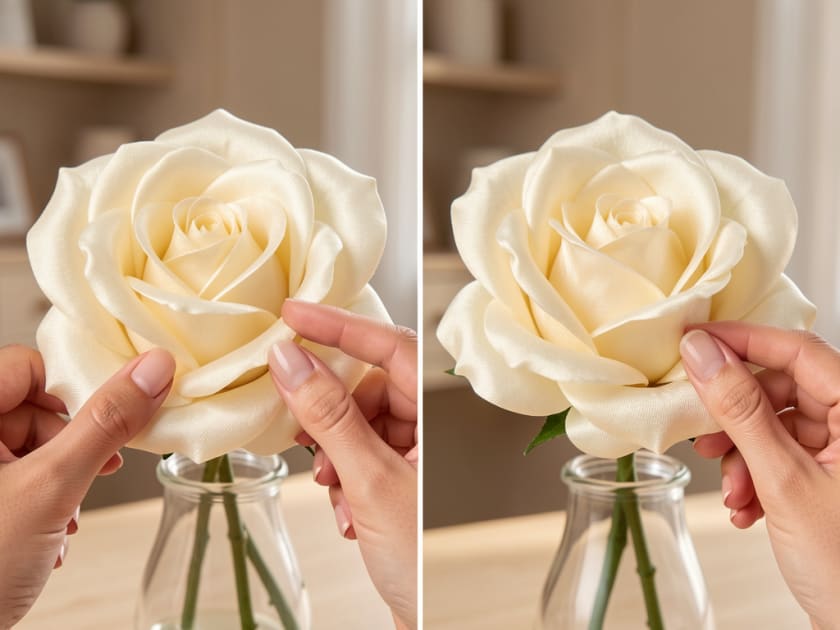
Comparing real-touch foam roses and silk flowers? We break down the differences in realism, durability, texture, and value — so you can choose the right artificial flowers for your home.
When shopping for artificial flowers, you'll come across two main materials: real-touch foam and silk. They're both described as "realistic", but they're very different products. Here's an honest comparison so you can make the right choice.
What Is Real-Touch Foam?
Real-touch foam (sometimes called "latex foam" or "soft foam") is a flexible, semi-translucent material engineered specifically to mimic the feel and appearance of fresh flower petals. It's the same material used in high-end artificial flowers sold to hotels, luxury retailers, and wedding planners.
Each petal is individually formed and hand-finished, resulting in natural-looking colour gradients, realistic veining, and a texture that genuinely feels like a fresh petal to the touch.
What Are Silk Flowers?
Despite the name, modern "silk" artificial flowers are usually made from polyester fabric stretched over wire frames. They have a fabric texture — smooth and slightly shiny — rather than the soft, yielding feel of a real petal. They've been the standard for artificial flowers for decades, and quality varies enormously by price point.
Side-by-Side Comparison
Realism
Real-touch foam wins clearly. The semi-translucent quality of foam means light passes through petals the same way it does with fresh flowers. Silk petals are opaque and have a fabric sheen that, on close inspection, reads as artificial. Foam roses have been known to fool even experienced florists at conversational distance.
Texture
Real-touch foam wins again. Run your finger across a real-touch foam petal and it yields like a fresh flower. Silk has a smooth, fabric texture that feels nothing like a real petal. For arrangements where guests will touch the flowers — centrepieces, bouquets, display pieces — foam creates a far more convincing experience.
Colour Accuracy
Real-touch foam has the edge. Foam flowers are typically airbrushed with multiple tones, replicating the natural colour variation within a single rose petal. Silk flowers tend to be a single flat colour, which looks less natural in person and in photographs.
Durability
Broadly comparable, with caveats. Both materials are long-lasting indoors. Silk can fray along petal edges over time, particularly if handled frequently. Foam is more resilient to physical handling and less prone to fraying, though it can discolour slightly under very direct, prolonged UV exposure.
Price
Silk is generally cheaper. Budget silk flowers are widely available. Real-touch foam commands a higher price because of the more complex manufacturing process and superior materials. However, the quality difference is significant — premium foam roses are worth the investment if realism matters to you.
Which Should You Choose?
If you want flowers that look and feel genuinely convincing — for weddings, home display, photography, or gifts — real-touch foam is the clear choice. If you need large quantities for crafts or background décor where close inspection isn't likely, budget silk may serve the purpose.
Which Material Suits Which Use?
- Bridal and bridesmaid bouquets: real-touch foam — bouquets are held, touched and photographed close up.
- Table centrepieces: real-touch foam, because guests see them at arm's length all evening.
- Home vases and gifts: real-touch foam for anything displayed at eye level.
- Flower walls, hat boxes and cake designs: foam rose heads are lightweight and easy to glue or pin.
- Large background décor on a tight budget: silk can make sense where nobody will see the flowers up close.
How to Spot Quality Real-Touch Foam
Not all foam flowers are equal. When you're comparing, look for:
- Soft, yielding petals that spring back after a gentle squeeze.
- Natural colour variation within each petal, rather than one flat colour.
- Well-formed petals and leaves with realistic veining and clean edges.
- Sturdy, bendable wire stems that hold their position.
Our foam roses buying checklist covers what to check before you buy.
Caring for Foam and Silk Flowers
Both materials prefer the same conditions: indoors, out of direct sunlight, and away from steam and heat. The main difference is cleaning. Foam is best kept dry — dust it with a soft brush or compressed air and avoid water or liquid cleaners. Our guide on how to clean artificial flowers explains the techniques.
Frequently Asked Questions
Is real-touch foam the same as latex?
The terms are often used interchangeably. “Real-touch”, “latex foam” and “soft foam” all describe flexible, semi-translucent petals designed to feel like fresh ones.
Do foam roses look good in photographs?
Yes. Light passes through the petals and the colour is layered, so foam roses photograph more naturally than flat, opaque silk — one reason they're popular for weddings.
Which lasts longer, foam or silk?
Both last for years indoors. Foam is less prone to fraying with handling; see how long artificial roses last for care tips that extend their life.
All of our roses are crafted from high-quality real-touch foam. Shop real-touch foam roses and see the difference for yourself.
Working on a flower wall, hat box or cake design? Our foam rose heads for crafts are lightweight and easy to glue or pin.
Ready to Shop Premium Faux Roses?
Explore our full collection of real-touch foam roses — perfect for weddings, gifts & home décor. Free UK delivery on orders over £50.
Shop Now